Overview
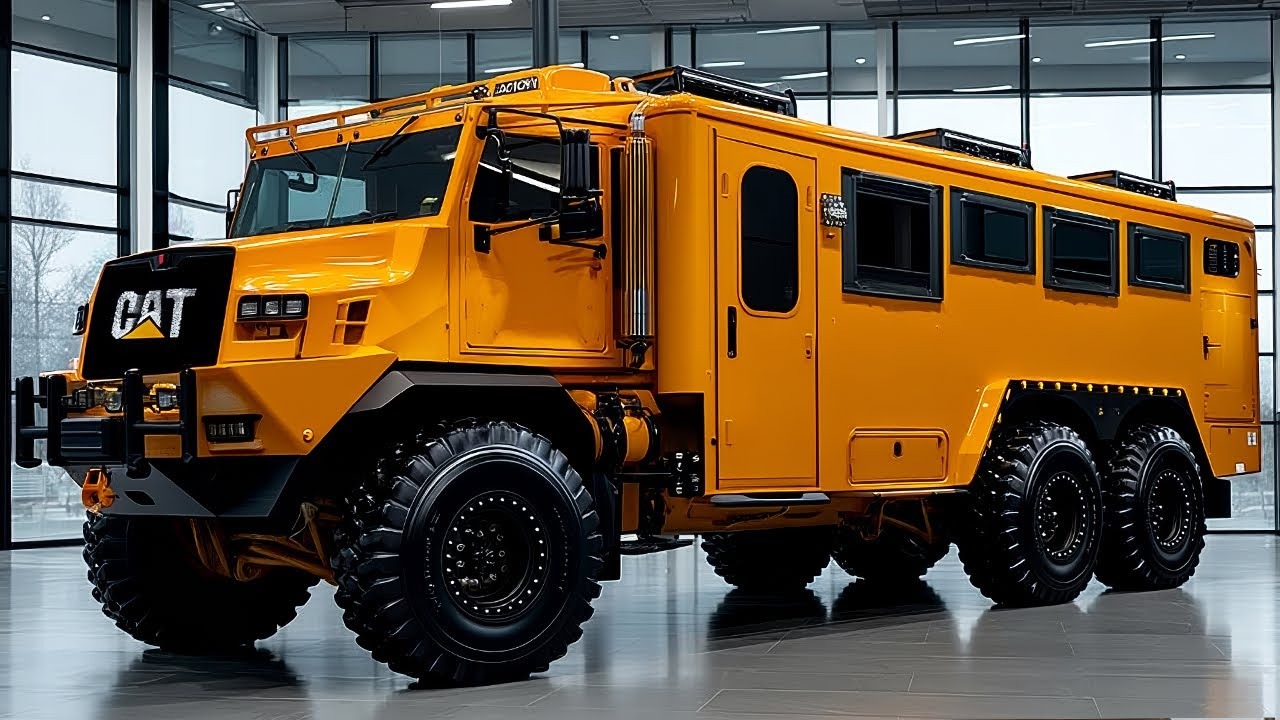
The 2026 Caterpillar Motorhome arrives as the most formidable blend of industrial might and five‑star hospitality ever attempted in a recreational‑vehicle platform. Built on the same CAT‑grade chassis that hauls mining equipment and construction fleets, this behemoth proves that the rigors of heavy‑duty engineering can coexist with hand‑crafted elegance. From the moment the massive grille greets you, the impression is unmistakable: this is a vehicle designed to dominate deserts, tundras, mountain passes and urban avenues while offering occupants the comfort of a boutique hotel on wheels. Every major system – power, suspension, interior layout, and safety – has been re‑engineered to meet the expectations of explorers, field‑service professionals, and luxury travelers who refuse to compromise on either capability or style.
Exterior Design
The exterior of the 2026 Caterpillar Motorhome reads like a modern fortress. The body is constructed from a three‑layer composite that sandwiches high‑strength steel between carbon‑fiber reinforced panels, delivering a structure that resists impacts, corrosion, and the constant vibration of off‑road use. An exoskeleton of reinforced cross‑beams runs the length of the vehicle, acting as a skeletal frame that distributes loads across the chassis and protects critical components from debris.

Side modules unfold with hydraulic assistance, extending the living space by up to 2.5 meters without compromising structural integrity. The signature CAT grille, now flanked by LED matrix lights, retains the brand’s industrial identity while providing enhanced illumination for night‑time navigation. Panoramic windows feature electro‑chromic glass that can tint at the touch of a button, offering privacy and solar heat reduction without sacrificing the sweeping views of remote landscapes.
The roof deck is reinforced with a steel lattice and fitted with modular rails that accept everything from solar‑panel arrays to a compact fold‑out lounge. Heavy‑duty off‑road tires, wrapped in reinforced sidewalls, sit on forged alloy wheels with integrated run‑flat capabilities, allowing the motorhome to keep moving even after a puncture. Utility lockers line the sides, each sealed against dust and moisture, providing dedicated storage for tools, spare parts, and fuel drums. Heated side mirrors and weather‑sealed doors complete an exterior that is as functional as it is commanding.

Interior Luxury
Step inside, and the stark contrast between the rugged shell and the sumptuous interior becomes evident. The cabin is divided into distinct zones, each crafted from premium materials selected for durability and aesthetic appeal. The main lounge features reclining leather seats stitched with CAT‑branded stitching, a walnut veneer console, and a stone‑effect wall panel that houses the climate‑control system. Ambient lighting runs along the ceiling in programmable zones, shifting from warm sunrise tones to cool nocturnal hues with a simple voice command.
A full‑wall slide‑out expands the living area to a spacious suite that can accommodate a king‑size CAT Signature Bed, complete with a custom orthopedic mattress and an integrated sleep‑tracking system that adjusts temperature and lighting to promote restorative rest. Adjacent to the sleeping area lies a walk‑in wardrobe built with modular shelving, pull‑out trays, and a built‑in garment care system that uses UV light to sanitize clothing between trips.

The kitchen rivals a high‑end mobile restaurant: a professional‑grade induction cooktop, a convection oven with steam injection, a dual‑zone refrigerator, and a wine‑preserving cellar maintained at a constant 55 °F. Countertops are fabricated from a quartz‑composite that resists scratches and spills, while the cabinetry is veneered with reclaimed teak, giving the space a warm, natural feel.
The bathroom offers a spa experience, featuring a rainfall shower with programmable pressure settings, a heated floor, and a vanity topped with a solid‑surface countertop that houses a facial steam module. All fixtures are water‑efficient, reducing consumption while maintaining the indulgent feel expected of a luxury suite.

Powertrain & Performance
Under the robust exterior, the 2026 Caterpillar Motorhome is powered by a choice between a 750 hp CAT 12.5 L industrial diesel engine and a hybrid‑electric system that pairs a 500 hp turbo‑charged diesel with a 300 kW electric motor. Both configurations feed into a heavy‑duty automatic transmission capable of handling up to 40,000 lb of torque, ensuring the vehicle can climb steep grades and tow auxiliary equipment without strain.
The diesel variant offers a maximum torque of 2,500 lb‑ft at low RPMs, delivering the grunt needed to power through sand dunes or ascend mountain passes. The hybrid system, meanwhile, provides instantaneous torque from the electric motor for smoother acceleration and reduces emissions when operating in environmentally sensitive areas. A regenerative braking system captures kinetic energy during downhill travel, feeding it back into a 200 kWh lithium‑iron‑phosphate battery bank that also powers the onboard smart‑home systems.

Fuel capacity is generous, with dual 600‑liter tanks that grant a range of over 2,000 km on a single fill. An optional auxiliary fuel bladder can be installed for expeditions that require extended endurance. The exhaust system incorporates a water‑fording snorkel, allowing the motorhome to traverse shallow bodies of water up to 0.8 m deep without risking engine damage.
Suspension & Handling
The vehicle’s suspension is a masterpiece of adaptive engineering. An air‑spring system, derived from CAT’s heavy‑equipment line, uses four independently controlled chambers that adjust ride height and stiffness based on terrain feedback. Long‑travel dampers equipped with magnetorheological fluid provide real‑time tuning, softening over rough surfaces and firming up on highways for optimal stability.

A multi‑mode driving controller offers four preset profiles—Highway, Off‑Road, Expedition, and Eco—that alter throttle response, torque distribution, and suspension settings with the push of a button. In Off‑Road mode, the vehicle raises its ground clearance by 200 mm, activates a low‑range gear set, and engages a torque‑vectoring system that directs power to the wheels with the most grip, significantly reducing wheel spin.
Steering is powered by a variable‑ratio rack‑and‑pinion system that offers a tight turning circle of 14 m despite the motorhome’s 13‑meter length. Integrated yaw‑rate sensors and electronic stability control work together to keep the vehicle planted on uneven ground, while a high‑capacity braking system with oversized ventilated discs provides reliable stopping power even when fully loaded.

Smart Technology
The interior and exterior of the motorhome are woven together by an extensive network of sensors and connected devices. A central touchscreen hub, positioned on the driver’s side console, consolidates climate control, lighting, security, and power management into a single, intuitive interface. Voice‑activated assistants, compatible with both Apple Siri and Google Assistant, enable hands‑free operation of nearly every function.
Satellite internet with global coverage keeps the cabin connected, supporting 4G‑LTE fallback for areas with limited satellite visibility. A 360° camera suite, featuring night‑vision and thermal imaging, provides a bird’s‑eye view during maneuvering and can be accessed via a tablet mounted on the exterior.

For entertainment, a retractable OLED cinema screen drops from the roof deck, folding out to a 110‑inch display with a built‑in surround‑sound system. Multi‑zone premium audio allows occupants to select different music playlists for the lounge, bedroom, and outdoor deck, all controlled through the central hub or personal mobile devices.
Over‑the‑air (OTA) updates automatically refresh the vehicle’s software, ensuring that navigation maps, security patches, and new features are delivered without the need for a dealer visit. The motorhome also integrates with a remote monitoring app that provides real‑time diagnostics, battery status, and fuel levels to the owner’s smartphone.

Safety Systems
Safety is a cornerstone of the 2026 Caterpillar Motorhome, and every component reflects that commitment. A load‑sensitive emergency braking system monitors vehicle mass and automatically applies optimal brake force in an imminent collision scenario. Adaptive cruise control maintains a set distance from the vehicle ahead, while lane‑keeping assist can gently steer the motorhome back into its lane if an unintentional drift is detected.
Blind‑spot monitoring utilizes radar sensors on each side of the vehicle to alert the driver of obstacles or oncoming traffic, even on rugged paths where visibility is limited. Terrain‑hazard mapping combines LiDAR and ultrasonic sensors to generate a 3‑D model of the ground ahead, warning the driver of steep grades, soft soil, or protruding rocks.

The cabin structure incorporates a reinforced steel cage that meets automotive crash‑test standards, while a full‑airbag system—front, side, and curtain—provides occupant protection in the event of a collision. An emergency locator beacon automatically transmits the vehicle’s coordinates to rescue services if a severe incident is detected. Additionally, a built‑in fire suppression system can deploy foam to extinguish fires in the engine bay or interior compartments.
Practical Utility
Beyond its luxury appointments, the motorhome is a workhorse built for real-world tasks. The rear utility bay spans the full width of the vehicle and features a modular track system that can secure oversized equipment, a portable generator, or even a compact ATV. Quick‑connect ports for water, fuel, and high‑amp electrical connections allow rapid deployment of external tools and accessories.
Inside, the floor plan is highly configurable. Movable wall panels let owners transform the space from a full‑time residence to a mobile office, complete with a fold‑out workstation, ergonomic chair, and dual monitors powered by the battery bank. An outdoor kitchen module can be attached to the roof deck, providing a propane‑fueled grill, prep sink, and refrigeration unit for extended camping trips.
Off‑grid capability is reinforced by solar panels that can be mounted on the roof or unfolded as portable arrays, feeding the battery bank and powering the interior while preserving fuel. The motorhome also supports plug‑and‑play connections for external generators or shore power, making it ready for both remote wilderness excursions and established campground stays.
Customization & Pricing
The 2026 Caterpillar Motorhome is offered as a limited‑edition platform, with production capped at 125 units per year to maintain exclusivity and ensure meticulous craftsmanship. The base model, equipped with the industrial diesel engine, starts at approximately $1.4 million. Choosing the hybrid powertrain adds a premium of $150,000, while bespoke interior finishes—such as exotic wood veneers, artisan‑crafted leather, or custom artwork—can drive the price beyond $2 million.
Clients work directly with a dedicated design liaison who coordinates material selection, technology packages, and exterior accessories. Options include a drone launch pad on the roof deck, an integrated laboratory module for scientific fieldwork, or a mobile medical suite with tele‑health equipment. Every vehicle is built to order, allowing owners to tailor the motorhome to their specific professional needs or personal preferences.
Final Thoughts
The 2026 Caterpillar Motorhome redefines what an RV can be. It marries the brute strength of an industrial machine with the refined comforts of a five‑star resort, delivering a platform capable of navigating the planet’s most hostile terrain while offering a home that rivals any stationary luxury property. For adventurers, corporate expedition teams, and high‑net‑worth individuals seeking a mobile base that never compromises on performance, safety, or style, this motorhome stands alone as a true benchmark in the world of extreme‑duty travel.
Frequently Asked Questions
1. How much fuel does the diesel version consume on a typical long‑haul trip?
The 12.5 L diesel engine averages about 18 L per 100 km when the motorhome is fully loaded and traveling at highway speeds. Consumption rises modestly in off‑road conditions due to increased drivetrain load.
2. Can the hybrid system operate in all‑electric mode for short distances?
Yes, the hybrid configuration allows up to 80 km of all‑electric operation, ideal for quiet campsite stays or short city drives where emissions restrictions apply.
3. What warranty coverage is offered for the powertrain and battery system?
Caterpillar provides a nine‑year/150,000‑km warranty on the diesel engine and a five‑year/100,000‑km warranty on the hybrid electric components, including the battery pack. The chassis and structural components are covered for ten years.
4. Is it possible to add a secondary sleeping area for additional guests?
The interior layout is modular; a secondary bunk can be installed in the rear utility bay by converting a portion of the cargo space into a fold‑out sleeping platform, complete with privacy curtains and ventilation.
5. How does the vehicle handle extreme weather, such as deep snow or heavy rain?
The air‑suspension can raise the chassis to improve ground clearance in deep snow, while the sealed cabin envelope, heated mirrors, and all‑weather sealing prevent moisture ingress. Integrated heating elements in the floor and sidewalls keep occupants comfortable in sub‑zero temperatures.
Disclaimer
The information presented here reflects the specifications and features announced by Caterpillar for the 2026 Motorhome model at the time of writing. Specifications, pricing, and availability are subject to change without prior notice. Prospective buyers should consult an authorized Caterpillar dealer for the most current details and to confirm that the vehicle meets their specific requirements.