Introduction
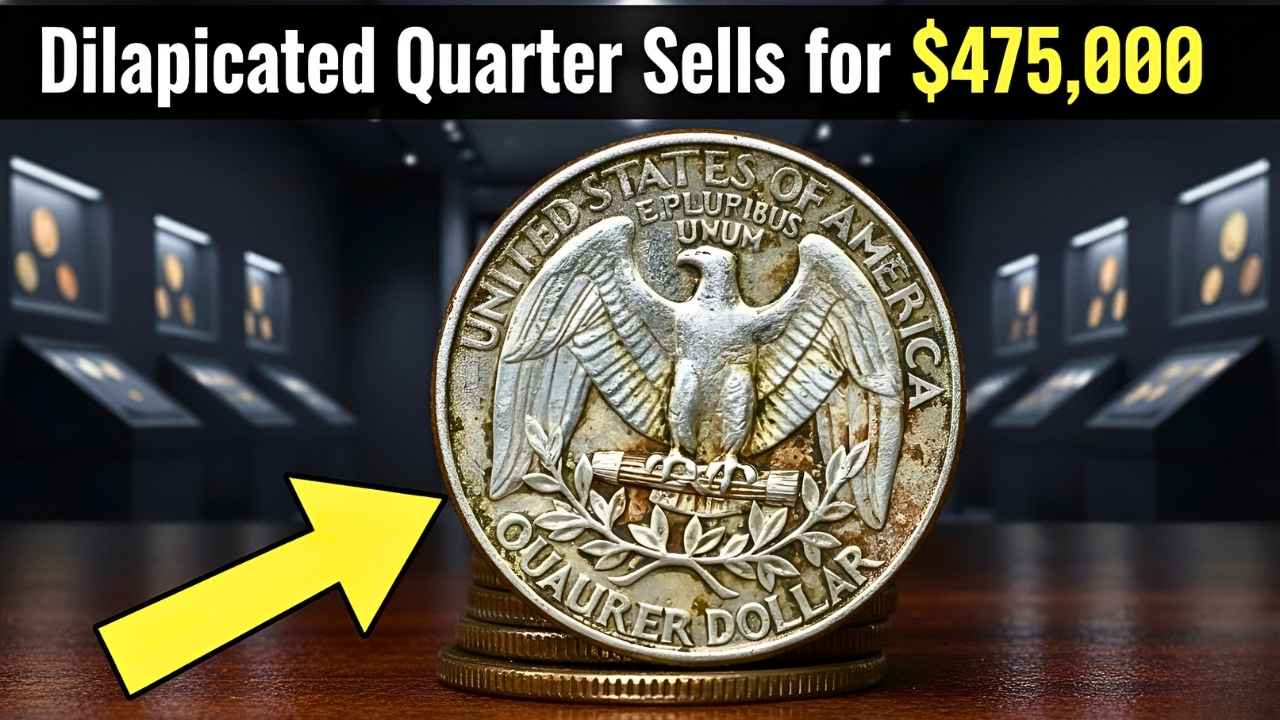
A battered United States quarter, the kind most of us have tossed into a jar of loose change, recently fetched an eye‑watering $475,000 at a private auction. The sale made headlines in numismatic circles and sparked a wave of curiosity among people who never imagined that a piece of pocket money could be worth a small fortune. How did a seemingly worthless coin command such a price, and what does this tell us about the hidden value that might be lying unnoticed in everyday cash? This article takes a deeper look at the story behind the sale, explains why certain coins can become extraordinarily valuable, and offers practical advice for anyone who wants to start hunting for their own hidden treasure.
What Made That Quarter So Valuable?
The dramatic price tag was not the result of the quarter’s age or its historical significance. Instead, the coin possessed a rare minting error that collectors prize above almost every other attribute. During the production process, a blank metal planchet meant for a different denomination was mistakenly fed into the press that strikes quarters. The result is a coin that is slightly heavier, with a subtly altered alloy composition, and a surface that shows faint clues to its mismatched origin when examined under magnification.

Only a handful of such “wrong‑metal” errors are known to exist, and most have never left the mint or were destroyed before entering circulation. When an example survives, reaches the market, and is authenticated by reputable experts, its scarcity drives the price skyward. In the case of the $475,000 quarter, the error was confirmed by three independent grading services, each noting the unique planchet composition and the flawless strike despite the coin’s worn exterior. The rarity of the mistake, combined with the fact that it is a circulating‑coin denomination (a quarter is minted in the billions each year), created a perfect storm for collectors willing to pay a premium for a one‑in‑a‑million find.
Hidden Treasures in Everyday Change
One of the most fascinating aspects of this story is how it underscores a broader truth in numismatics: many of the world’s most valuable coins do not look like treasure at first glance. A coin can be heavily scarred, corroded, or bent, yet still be a prize if it belongs to a scarce variety.

The principle is simple—rarity can outweigh condition. Collectors rank a coin’s desirability based on three main factors: rarity, demand, and grade. When rarity is extreme, even a heavily circulated example can command a high price because the pool of available specimens is virtually non‑existent. This means that a coin sitting at the bottom of a junk drawer may be worth thousands, or even millions, if it bears a unique error, an unusual mintmark, or a production date that was otherwise short‑lived.
How the Sale Impacts the Coin Market
Whenever a high‑profile coin sells for an unexpected sum, the ripple effects can be felt throughout the market. First, the sale generates media coverage that brings new eyes to the hobby. People start looking through their own pocket change, banks, and coin rolls with fresh enthusiasm. This renewed interest translates into higher demand for related items—other error coins, low‑mint‑year quarters, and early clad issues—all of which can see modest price appreciation as a result.

Second, auction houses and dealers often use landmark sales as benchmarks when setting reserve prices for similar coins. If a collector sees that a “wrong‑metal” quarter fetched half a million dollars, they may be more willing to submit higher offers for other error varieties, driving up the overall market value for that segment.
Finally, the sale encourages more owners of old or obscure coins to seek professional grading. Increased submissions lead to the discovery of previously unknown rare pieces, enriching the market inventory and providing additional data points that help define future price trends. In short, a single sensational transaction can catalyze a cascade of activity that reshapes collector behavior and market dynamics for years to come.

Tips for Spotting Potentially Valuable Coins
If the idea of turning a handful of loose change into a valuable find excites you, there are several practical steps you can take to increase your odds:
Look for weight irregularities. A quarter that feels noticeably heavier or lighter than usual may indicate a different metal composition. A digital scale that can measure to the nearest tenth of an ounce is a helpful inexpensive tool.

Examine the design closely. Errors such as doubled dies, off‑center strikes, missing letters, or extra elements are readily visible under a magnifying glass or a jeweler’s loupe.
Check the date and mintmark. Certain years—especially those with low mintage figures or known production problems—are more likely to produce rare varieties. For example, quarters dated 1964 and 1965 were the first to shift from 90% silver to a copper‑nickel clad composition, leading to a handful of transitional issues that collectors seek.
Observe discoloration or patina. Unusual coloration can signal an alloy mix that doesn’t belong to the denomination’s standard composition. While some discoloration is simply a result of age, strange hues may warrant a closer look.
Consult an expert. If you encounter a coin that exhibits any of the above traits, consider sending high‑resolution photos to a reputable grading service or local numismatic club. Even a quick opinion can save you from discarding a hidden gem.



The Emotional Pull of Finding Treasure
Beyond the financial upside, the allure of discovering a rare coin taps into something deeper: the human love of stories and mysteries. Each coin carries a silent narrative—where it was minted, who handled it, and how it survived the wear and tear of daily transactions. When an ordinary‑looking quarter turns out to be a coveted rarity, the transformation feels almost magical, as if the mundane world has revealed a secret portal to a hidden past.
That sense of wonder is what keeps hobbyists returning to the hobby year after year. It does not matter whether a collector has a professional appraisal room or merely a jar of spare change; the possibility that any coin could be a treasure fuels the excitement and sustains the community.

What the Future Might Hold for Rare Coin Prices
The $475,000 quarter has set a new ceiling for what collectors might expect to pay for a circulating‑coin error. Historically, record sales tend to push the market upward: once a price is demonstrated, buyers become more comfortable offering higher amounts for comparable items.
That said, price growth does not happen in a vacuum. Economic factors such as inflation, investor interest in alternative assets, and the overall health of the collectibles market all play roles. Should interest in tangible assets rise, rare coins could see accelerated price appreciation. Conversely, a downturn in discretionary spending might temper the upward trajectory, but the underlying scarcity of genuine errors will likely preserve a baseline level of value.

Should You Start Collecting?
If you are considering diving into coin collecting because of stories like the $475,000 quarter, start modestly. Build a small, focused collection rather than buying a random assortment of every coin you encounter. Decide whether you prefer a thematic approach—such as collecting all mint‑error quarters—or a broader one like acquiring a range of historic denominations.
Invest in basic tools: a magnifying glass, a soft coin holder, and a digital scale. Join a local numismatic club or online forum to learn from seasoned collectors. Most importantly, enjoy the process. Collecting is as much about the journey as it is about the potential payoff.

Final Thoughts
The sale of a heavily damaged quarter for nearly half a million dollars is a vivid reminder that rarity and history can be concealed in the most ordinary objects. While most of us will never stumble upon a life‑changing coin, the knowledge that such treasures exist adds a thrilling layer to everyday life. By paying a little more attention to weight, design, date, and condition, anyone can become a more informed observer of the change that clinks in our pockets. Whether you become a serious collector or simply keep an eye out during your next cash‑counting session, the world of numismatics offers endless possibilities for discovery and enjoyment.
Frequently Asked Questions
1. How common are “wrong‑metal” mint errors?
They are extremely rare. Only a few documented examples have ever been authenticated, and most were destroyed before entering circulation.
2. Can a heavily worn coin still be valuable?
Yes. If the coin belongs to a scarce variety—such as an error, low‑mint year, or unique alloy—the condition may be less important than the rarity itself.
3. Should I have my coins graded before selling them?
Professional grading provides an objective assessment of a coin’s condition and authenticity, which can significantly increase buyer confidence and potential price.
4. What is the best way to store coins to preserve their value?
Store coins in climate‑controlled environments, using inert protective holders (such as Mylar flips or acrylic cases) to prevent corrosion and physical damage.
5. Are there online resources where I can learn more about error coins?
Websites like the American Numismatic Association (ANA), CoinWeek, and various specialty forums host articles, reference guides, and community discussions about mint errors and other rare varieties.
Disclaimer
The information presented in this article is for educational and entertainment purposes only. It does not constitute financial, investment, or professional advice. Prices, market conditions, and rarity assessments can change over time, and the author’s opinions should not be interpreted as a guarantee of future returns or specific outcomes. Always conduct your own research or consult a qualified numismatic professional before making purchasing or selling decisions.