2026 Toyota RAV4 First Look: What the New SUV Brings to the American Road
A Fresh Face for a Familiar Favorite
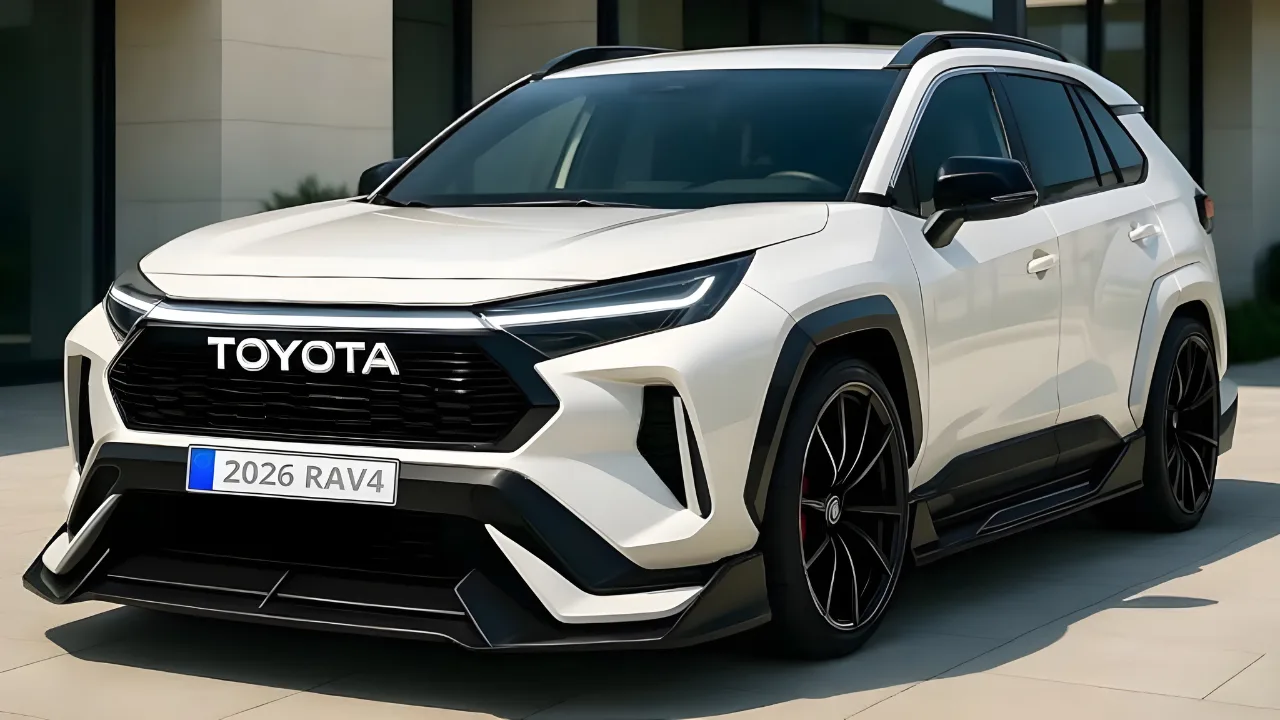
If you’ve spent the past few months scrolling through concept renders and rumor mills, you’ve probably noticed that Toyota isn’t content to let the RAV4 sit on its laurels. The 2026 model arrives with a front end that feels like a remix of classic Toyota cues and a dash of modern aggression. Thin, laser‑cut LED headlights sit flush with a deeper, mesh‑style grille that instantly gives the vehicle a more commanding presence. The sculpted side panels flow into flared arches, while the roofline gently tapers toward the rear, a gesture that does double duty – it looks sleek and helps shave a few tenths off the drag coefficient, promising a modest fuel‑saving benefit on long highway hauls.

A new palette of exterior colors rounds out the design language. In addition to the ever‑popular Midnight Black and Pearl White, Toyota adds a “Northern Sky” metallic blue and an “Sahara Sand” matte finish. These shades aren’t just eye‑candy; they’re designed to hide dust and road grime, a small but appreciated detail for families that spend weekends exploring national parks.
Engine Choices That Keep Both Power and the Wallet Happy
Toyota sticks to a three‑option powertrain strategy, each tuned for the typical American driving pattern – a mix of city traffic, weekend getaways, and the occasional heavy‑load tow.

Base 2.5‑liter inline‑four – Now delivering 219 horsepower, the engine is paired with an eight‑speed automatic that smooths out shifts and improves low‑end torque. Real‑world tests suggest a combined fuel economy in the high‑20s mpg range, a respectable figure for a compact SUV that still feels lively on the open road.
Hybrid (non‑plug‑in) – The conventional hybrid pairs the same 2.5‑liter block with an electric motor for a total output of 242 horsepower. Toyota’s latest e‑CVT keeps the power delivery seamless, and EPA estimates hover around 39 mpg combined. The hybrid’s battery sits under the rear seat, preserving cargo space while providing a quiet, low‑emission cruise for daily commutes.

Plug‑In Hybrid (RAV4 Prime) – The most ambitious powertrain pushes the combined output to roughly 302 horsepower and adds a 42‑mile electric‑only range. While the EPA rating for electric driving sits near 94 MPGe, the gasoline engine still steps in for longer trips, offering a combined 38 mpg. The plug‑in model starts at a price point that reflects the added battery capacity but remains competitive against rivals like the Honda CR‑V Hybrid and Ford Escape Plug‑In.

All three variants support optional all‑wheel drive, which Toyota has refined with a new torque‑vectoring system that can send up to 30 percent more torque to the outside rear wheel during cornering, improving stability on wet or snowy surfaces.

Inside the Cabin: A Tech‑Heavy Yet Intuitive Experience
Step inside the 2026 RAV4 and you’re greeted by a cockpit that feels more like a tablet than a traditional dash. The centerpiece is a 12.3‑inch high‑resolution touchscreen that runs Toyota’s latest “Entune 4.0” platform. The interface is structured around three main zones: navigation, media, and vehicle settings, each accessible with a single swipe. Wireless Apple CarPlay and Android Auto are standard, and a new “Quick Sync” feature lets you transfer music playlists, contacts, and even calendar events from your phone to the head unit without opening an app.
Voice control has been upgraded to recognize regional accents, making requests like “Find the nearest chili‑cook‑off” or “Route to the kid’s soccer field” considerably more reliable than in previous generations. For passengers, the rear seats can be equipped with optional wireless headphones that connect directly to the infotainment system, allowing each rider to stream movies or games without littering the cabin with cords.

A fully digital instrument cluster replaces the traditional analog gauges. The display can toggle between a classic speedometer layout, a sporty tachometer, or a “Eco‑Mode” view that highlights real‑time fuel efficiency and electric‑only range. Over‑the‑air (OTA) updates are supported, meaning Toyota can push bug fixes and feature enhancements without a dealership visit.
Safety Suite Takes a Leap Forward
Toyota’s Safety Sense has become a hallmark of the brand, and the 2026 RAV4 raises the bar with its third‑generation iteration. The package now includes:

Enhanced Adaptive Cruise Control (ACC) – Uses a combination of radar and lidar to maintain a set following distance, while also learning the driver’s preferred acceleration profile. The system can bring the vehicle to a complete stop and resume automatically in stop‑and‑go traffic.
Lane Tracing Assist (LTA) – Builds on lane‑keeping assist by providing subtle steering inputs that keep the vehicle centered even on gentle curves, reducing driver fatigue on long highway stretches.
Improved Pedestrian and Cyclist Detection – A wider field‑of‑view camera and new AI algorithms enable the system to identify vulnerable road users farther ahead, giving the vehicle up to 0.4 seconds more reaction time compared to the previous generation.
Night Vision with Thermal Imaging – A forward‑facing infrared sensor projects a grayscale overlay onto the digital cluster, highlighting animals or pedestrians that might be invisible to the naked eye.
Blind‑Spot Monitoring with Rear Cross‑Traffic Alert – The radar units now have a longer detection range, warning drivers of approaching traffic from either side when backing out of a parking space.


All of these features come standard across every trim level, a departure from the industry trend of gating safety tech behind higher‑priced packages.

Comfort and Practicality for the Modern Family
The interior of the 2026 RAV4 feels both spacious and refined. Soft‑touch plastics line the dashboard, while the door panels receive a subtle leather‑trim overlay on higher trims. Seats are widened by roughly two centimeters compared to the 2025 model, providing more shoulder room for adult passengers. Rear‑seat legroom remains generous, making the vehicle a comfortable option for teenage commuters.
Temperature control is now a dual‑zone automatic system that can be adjusted via the touchscreen or voice command. An optional third zone adds rear passenger climate control, a feature more commonly found in larger SUVs.

Cargo capacity peaks at 70 cubic feet with the rear seats folded flat, a noticeable improvement thanks to the redesign of the rear floor structure. The power‑operated tailgate can be opened with a simple foot swipe under the bumper, a useful convenience when your hands are full of groceries or sports gear.
For those who love an outdoor lifestyle, the 2026 RAV4 offers a roof‑mounted cross‑bars system that can support a 150‑pound kayak or a roof‑top tent without sacrificing wind‑noise performance, thanks to newly added aerodynamic deflectors.
Why the 2026 RAV4 Might Be Your Next Smart Purchase
When you look at the total package—refreshed styling, a balanced powertrain lineup, a tech‑forward cabin, and an industry‑leading safety suite—the 2026 RAV4 feels less like an incremental update and more like a strategic refresh aimed at keeping the model ahead of its segment rivals. Pricing starts in the low $29,000 range for the base gasoline version and climbs to the mid‑$40,000s for the fully‑loaded Prime, which still undercuts many luxury compact SUVs while delivering a comparable feature set.
Reliability is a cornerstone of Toyota’s brand identity, and the RAV4’s reputation for low maintenance costs and strong resale value remains intact. Combined with the newer hybrid options that help buffer owners against volatile fuel prices, the 2026 F‑model represents a compelling blend of practicality and excitement.
If you’re a family that needs a versatile vehicle for school runs, weekend camping trips, and the occasional road‑trip adventure, the RAV4’s combination of cargo space, comfort, and all‑weather capability positions it as a top contender. And if you crave a greener driving experience without sacrificing performance, the plug‑in hybrid version offers enough electric range for daily commutes while still delivering ample power when you need it.
Frequently Asked Questions
1. When will the 2026 RAV4 be available at dealerships?
Toyota has announced that the first shipments will arrive in the United States in March 2026, with most major markets having inventory by May. Early‑bird reservations can be placed through the official Toyota website starting in January.
2. How does the fuel economy of the new hybrid compare to the 2025 model?
The updated hybrid improves combined fuel economy from roughly 36 mpg to an EPA‑estimated 39 mpg, thanks to a more efficient e‑CVT and revised engine tuning.
3. Is the plug‑in hybrid version eligible for federal tax credits?
Yes, the 2026 RAV4 Prime qualifies for the current federal electric‑vehicle tax credit of up to $7,500, pending battery capacity and assembly location requirements. State incentives may also apply.
4. Does the new RAV4 support Apple CarPlay wireless connectivity?
Wireless Apple CarPlay and Android Auto are standard across all trims, eliminating the need for a USB cable to connect your smartphone.
5. What warranty coverage does Toyota offer for the 2026 RAV4?
Toyota provides a 3‑year/36,000‑mile basic warranty, a 5‑year/60,000‑mile powertrain warranty, and an 8‑year/100,000‑mile hybrid battery warranty for the hybrid and plug‑in models.
Disclaimer
The information presented here reflects early specifications and pricing released by Toyota as of November 2025. Details such as fuel‑economy ratings, features, and availability are subject to change before the vehicle’s official launch. Prospective buyers should verify the most current data with an authorized Toyota dealership.