Introduction
The automotive world is abuzz with whispers of a new high‑performance electric sedan that promises to rewrite the rules for Audi’s RS family. Spotted on the Nürburgring’s hilly perimeter in a set of camouflage‑clad prototypes, the 2027 Audi RS6 e‑tron Sedan looks like the next logical step for a brand that has long blended race‑track pedigree with everyday usability. While the car is still under wraps, the clues gathered from test runs, spy photos, and official filings give a fairly clear picture of what Audi aims to deliver: a wide‑body, four‑door performance machine that marries the visceral excitement of a traditional RS engine with the instant torque and silent delivery of a fully electric powertrain.
Exterior Design
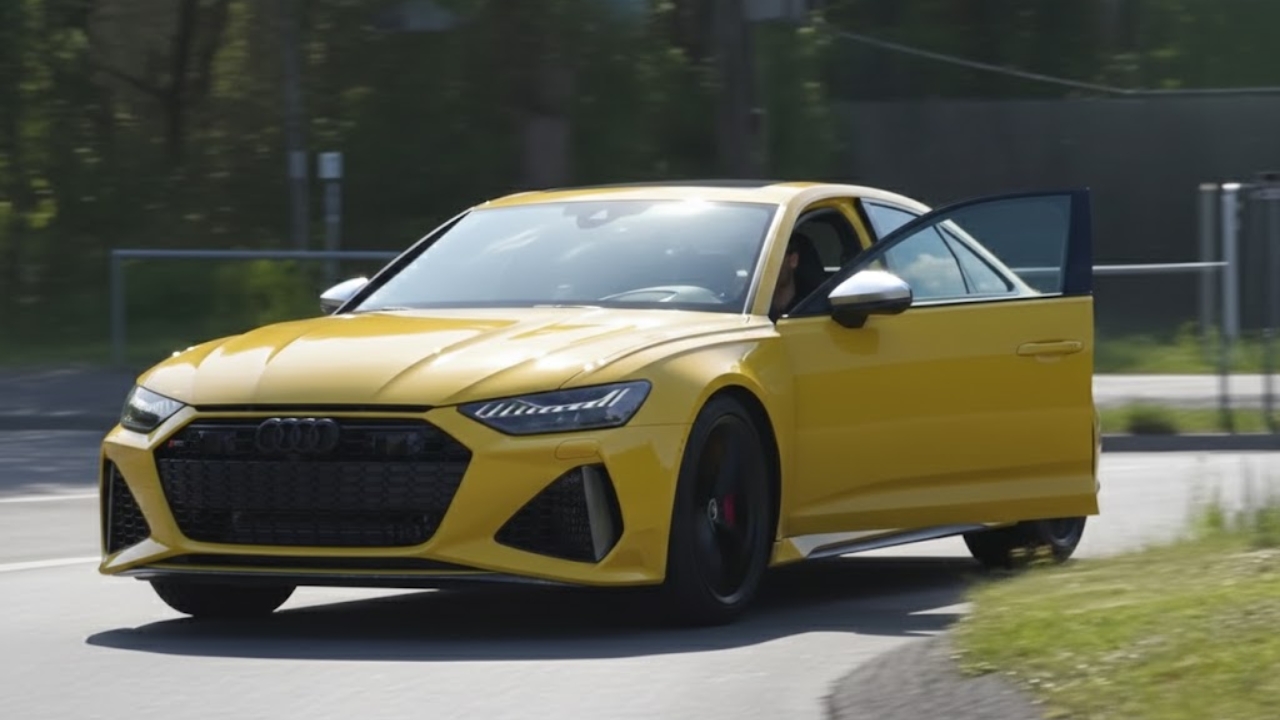
Even under a veil of matte camo, the RS6 e‑tron’s silhouette is unmistakable. Its proportions hint at a longer wheelbase compared with the current gasoline‑powered RS6, while the front fascia adopts a closed‑off e‑tron grille flanked by sharp LED matrix headlights that sport a subtle “RS” light signature. The hood features a deep, sculpted crease that gives the car a pronounced forward‑leaning stance, a visual cue Audi has used to suggest a weight‑biased layout.

The side profile is where the wide‑body treatment truly shines. Muscular rear fenders stretch outward, creating a pronounced stance that not only looks aggressive but also helps house larger tires and a robust aerodynamic package. Tucked under the side skirts are hidden air intakes that feed the cooling system for the battery and the electric motors, while a set of discreet vents near the rear doors assist in brake cooling during track days.
At the rear, the diffuser is exposed, with a series of vertical fins designed to manage airflow and generate downforce without adding excessive drag. A modest lip spoiler integrates into the bumper, and the central rear spoiler doubles as a cooling vent for the high‑voltage components. The signature quad‑exhaust cutouts have been replaced by a sleek light strip that glows in RTX mode, reinforcing the car’s electric nature while maintaining an RS‑like aggressiveness.

Audi has equipped the prototype with large, multi‑spoke wheels wrapped in low‑rolling‑resistance performance tires. The spokes are designed to channel airflow toward the brakes, and the wheels themselves appear to be made from a lightweight alloy, keeping unsprung mass to a minimum. Overall, the exterior looks purpose‑built for high‑speed stability while still retaining the luxurious aura expected of an Audi flagship.
Interior and Comfort
Inside, the cabin appears to be a blend of classic RS sportiness and forward‑thinking EV minimalism. The interior spy shots reveal a driver‑focused cockpit dominated by a flat‑bottom steering wheel wrapped in Alcantara, complete with carbon‑fiber inserts and a set of tactile paddles for quick gear‑less torque vectoring adjustments. The seats are bolstered bucket styles with RS‑badged stitching, and the upholstery combines Nappa leather with contrast‑colored Alcantara inserts that hint at a racing heritage.

The center console has been reworked to accommodate a larger, 15‑inch touchscreen that runs Audi’s newest MMI system. A dedicated “RS‑e‑tron” UI layer provides quick access to power‑train settings, torque distribution, and regenerative‑braking modes. A fully digital instrument cluster spans the width of the dashboard, overlaying classic analog gauges with electric‑specific data such as instantaneous torque, battery state‑of‑charge, and range estimator.
Climate control has been upgraded to a multi‑zone system that also manages battery thermal management, ensuring optimum performance in hot or cold conditions. Ambient lighting offers a palette of colors, with a signature RS red accent that can be toggled on or off depending on the driver’s mood.

Rear passengers benefit from generous legroom and a split‑folding bench that can expand the trunk space for luggage or gear. A discreet rear‑center console houses a secondary infotainment screen, making it possible for backseat occupants to control media or access navigation without distracting the driver.
Powertrain and Performance
While Audi has not released official specifications, the consensus among industry insiders points toward a dual‑motor layout with the option of a third motor dedicated to rear torque vectoring. The combined output is expected to hover around 700 hp, with a torque figure in excess of 950 Nm, delivering acceleration comparable to current hyper‑performance EVs. Test footage from the Nürburgring suggests a 0‑60 mph sprint in the low 3‑second range, with the car maintaining strong performance even on longer straights thanks to a sizable battery pack that likely sits near 100 kWh.

The battery architecture appears to be modular, allowing for rapid charging up to 350 kW, which could translate to roughly 80 % charge in under 25 minutes at a high‑power DC fast‑charging station. Audi’s thermal management system seems to incorporate liquid cooling for both the battery cells and the electric motors, ensuring sustained performance during repeated high‑load laps.
Regenerative braking is tunable across multiple levels, letting drivers select how much kinetic energy is recaptured during deceleration. An optional “one‑pedal” mode can bring the car to a near‑complete stop without the need to press the brake pedal, a feature particularly useful in city traffic.

Chassis and Handling
Audi has always been proud of its quattro all‑wheel‑drive heritage, and the RS6 e‑tron pushes this legacy further with an advanced rear‑biased torque‑vectoring system. Sensors constantly monitor wheel slip, steering angle, and yaw rate, adjusting torque distribution in real time to keep the car planted through tight corners.
The suspension is a fully adaptive air system that can switch between a comfort‑oriented setting for daily driving and a sport‑focused mode for track use. In the latter, the system stiffens the springs, lowers the ride height, and adjusts damping rates to reduce body roll and improve responsiveness. A rear‑steer module can turn the rear wheels up to a few degrees in the opposite direction of the front wheels at low speeds for tighter maneuverability, or in the same direction at higher speeds to enhance stability.

Audi’s engineers have also focused on reducing the vehicle’s center of gravity by positioning the battery pack low within the chassis. This, combined with the wide track, contributes to the car’s confident handling characteristics as captured in the on‑track footage, where the prototype exhibits deliberate, sharp turn‑in and minimal understeer even when pushed to the limits.
Technology and Infotainment
Beyond the performance hardware, the RS6 e‑tron is set to showcase Audi’s most advanced software suite to date. The MMI system runs on a Linux‑based platform that promises quicker boot times and smoother multitasking. Voice‑control has been refined with natural‑language processing, allowing drivers to dictate navigation destinations, media selections, or even change power‑train modes without taking their eyes off the road.

A new “Smart‑Route” navigation function plans journeys based on real‑time charging station availability, battery state, and driver preferences, ensuring the optimal blend of speed and efficiency. The vehicle also houses a suite of cameras that feed a 360‑degree view to the central display, with lane‑keeping assist, adaptive cruise control, and lane‑change assist integrated as standard.
For audio enthusiasts, a bespoke RS‑tuned 12‑speaker Bang & Olufsen system delivers a high‑fidelity listening experience, while a set of active noise‑cancelling speakers in the cabin helps keep the interior whisper‑quiet even under heavy acceleration.

Over‑the‑air (OTA) updates will enable Audi to push new features, performance maps, and bug fixes throughout the car’s lifecycle, ensuring that owners benefit from continual improvements without needing a dealership visit.
Safety Features
Safety remains a cornerstone of Audi’s philosophy, and the RS6 e‑tron benefits from an extensive array of driver‑assist technologies. A predictive adaptive cruise control uses radar and lidar to maintain a safe distance from traffic while anticipating braking events ahead. In emergency situations, automated emergency braking can engage with millisecond precision, detecting both vehicles and vulnerable road users such as cyclists.

The structural design incorporates an aluminium‑high‑strength steel space frame that houses the battery pack within a reinforced safety cell. In the event of a collision, the battery’s protective casing is engineered to absorb impact energy, reducing the risk of thermal runaway. Multiple airbags, including front, side, and curtain modules, are orchestrated through a high‑speed control unit that decides the optimal deployment strategy based on crash severity and occupant position.
A rear‑view camera system, augmented with AI‑driven object detection, highlights pedestrians and large animals in low‑light conditions. Additionally, a “track‑mode” safety suite can disable certain assist systems to give the driver full control when pushing the car on a closed circuit, while still monitoring critical parameters like battery temperature and chassis stability.
Practicality and Everyday Use
Although the RS6 e‑tron is a halo model, Audi has not abandoned practicality. The sedan retains a spacious rear seat that can comfortably accommodate adults on long trips, and the trunk offers roughly 600 liters of cargo space, expandable to over 1,200 liters with the rear seats folded flat. A dedicated storage compartment houses the high‑voltage charging cable, while a set of ruggedized tie‑down points in the cargo area cater to enthusiasts who might want to bring along track equipment or luggage.
The EV’s quiet nature translates to a serene cabin environment, making it well suited for both spirited drives and relaxed cruising. With an estimated WLTP range of around 350 miles on a single charge, the RS6 e‑tron can serve as a family hauler on weekend getaways. The inclusion of a comprehensive charging network partnership will allow owners to locate compatible fast‑charging stations via the infotainment system, simplifying long‑distance travel.
Audi has also equipped the vehicle with a suite of convenience features: keyless entry, a hands‑free trunk release, wireless charging pads for smartphones, and an optional rear‑seat entertainment system with dual displays and streaming capability.
Pricing and Market Outlook
While official numbers are still pending, market analysts predict that the RS6 e‑tron will sit in the premium‑performance EV segment, likely priced between $130,000 and $150,000 USD, depending on final specifications and optional packages. Audi is expected to offer a “Performance Plus” bundle that adds carbon‑fiber aerodynamic components, a higher‑capacity battery, and a bespoke interior trim kit.
The global launch is slated for late 2026, with pre‑orders opening shortly thereafter. Audi plans to roll the sedan out across major markets—Europe, North America, and select Asian territories—by early 2027. Given the brand’s reputation and the hype surrounding an electric RS, demand is expected to outstrip supply in the initial months, prompting a waiting list similar to what the RS7 and the e‑tron GT have experienced.
Final Thoughts
The 2027 Audi RS6 e‑tron Sedan represents a pivotal moment for the German automaker, signaling a decisive shift toward electrified performance without sacrificing the emotional connection that has defined the RS badge for decades. Its combination of a wide‑body, aggressive aerodynamics, a high‑output electric drivetrain, and a chassis tuned for track use demonstrates Audi’s commitment to pushing the envelope of what a performance sedan can be.
For drivers who cherish the thrill of instantaneous torque, the nuance of adjustable torque vectoring, and the refined luxury of an Audi interior, the RS6 e‑tron appears poised to deliver a compelling package. While the final specifications will ultimately dictate how it stacks up against rivals such as the Tesla Model S Plaid, Porsche Taycan Turbo S, and Mercedes‑EQ AMG models, the early indicators suggest that Audi is ready to write a new chapter in its RS saga—one that runs on electrons instead of gasoline.
Frequently Asked Questions
1. When will the 2027 Audi RS6 e‑tron be available for purchase?
Audi has announced a global launch window for late 2026, with full market availability expected in early 2027. Pre‑orders are anticipated to open a few months before the official unveiling.
2. What is the expected electric range of the RS6 e‑tron?
Current estimates place the WLTP range at roughly 350 miles on a single charge, though real‑world figures will depend on driving style, weather conditions, and selected performance mode.
3. How fast can the RS6 e‑tron charge on a DC fast‑charging station?
The vehicle is designed to accept up to 350 kW of DC power, allowing an 80 % charge in under 25 minutes at compatible stations.
4. Will the RS6 e‑tron retain the traditional RS interior styling cues?
Yes. Spy images show RS‑branded stitching, sport‑focused bucket seats, a flat‑bottom steering wheel, and carbon‑fiber trim, all blended with modern EV‑centric controls.
5. Is there an option for a more track‑oriented package?
Audi plans to offer an optional “Performance Plus” package that includes upgraded aerodynamics, a larger battery, carbon‑fiber components, and additional chassis tuning for track use.
Disclaimer
The information presented in this article is based on publicly available spy photos, manufacturer filings, and reputable automotive journalism sources. All specifications, performance figures, and pricing are subject to change until officially confirmed by Audi. Readers are encouraged to verify details with the manufacturer or an authorized Audi dealer before making purchasing decisions.