Introduction
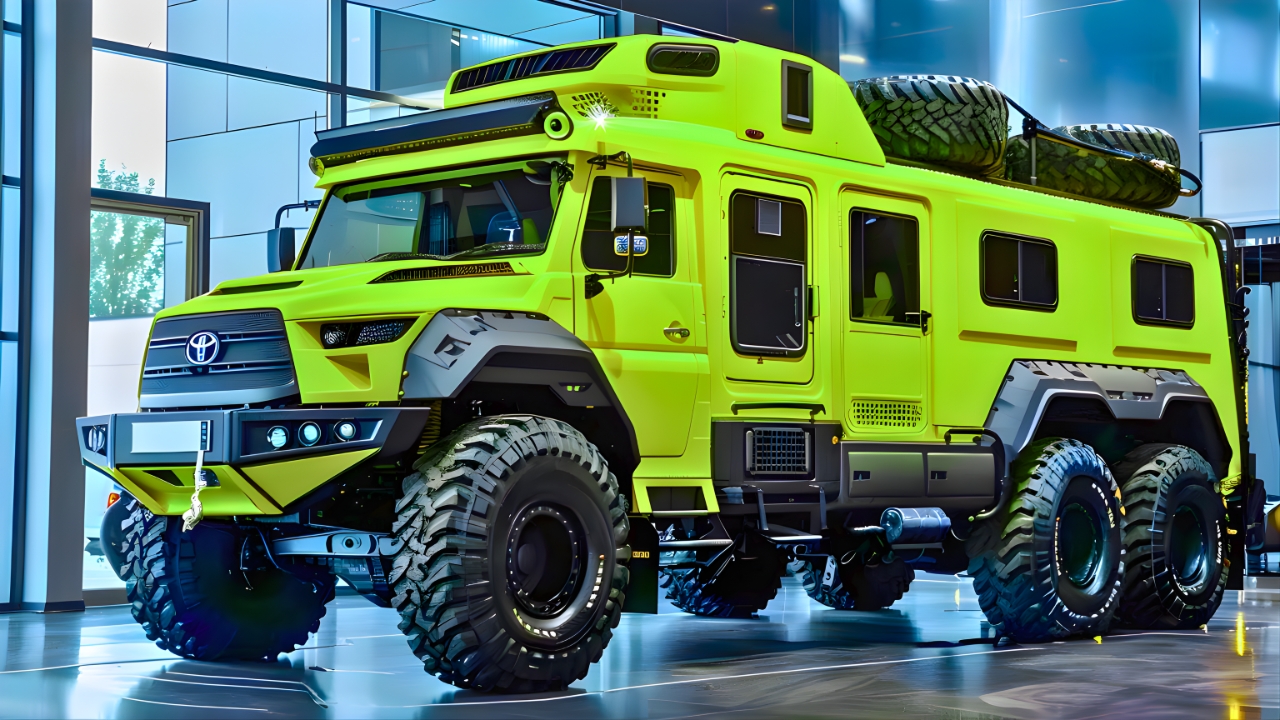
The 2026 Toyota Terramax 6×6 arrives as the most ambitious off‑road vehicle Toyota has built to date. Combining a three‑row, six‑wheel drivetrain with a high‑output hybrid V6, the Terramax is meant for explorers who need raw power, uncompromising durability, and modern connectivity while venturing far from paved roads. From its militarized exterior to its cabin‑level comforts, the Terramax tries to balance rugged utility with everyday usability, positioning itself as a true overland workhorse for the coming decade.
Exterior Design
Every line of the Terramax is designed to survive extreme terrain. The front fascia features a massive, honey‑comb grille flanked by dual LED matrix headlights that incorporate fog and trail lighting modes. Functional air intakes feed the twin‑turbo system while also cooling the high‑capacity battery pack.

Both bumpers are fabricated from hardened steel and are equipped with reinforced tow hooks, winch receivers, and removable impact guards. Under the vehicle, military‑grade skid plates protect the drivetrain, fuel tank, and battery modules from rocks and debris.
The wheel arches are deliberately wide, allowing 22‑inch off‑road alloy wheels to sit beneath a set of high‑traction, all‑season tires. Each axle is independently articulated, giving the vehicle a stable stance on uneven ground. Roof‑mounted cargo racks, LED light bars, and a rear spare‑wheel carrier complete a silhouette that screams “ready for anything.”

Interior and Comfort
Inside, the Terramax adopts a driver‑first philosophy while still delivering a spacious cabin for up to eight passengers. The dashboard is anchored by a large, bezel‑free touchscreen that tilts for better visibility when the vehicle is angled steeply. Soft‑touch surfaces are strategically placed on high‑wear areas, but all upholstery is treated with a water‑repellent coating and reinforced stitching to stand up to mud, dust, and repeated use.
Seats feature integrated heating, ventilation, and a lumbar‑support algorithm that adapts to the terrain’s vibrations. The rear bench folds flat to create a 2,500‑liter cargo floor, while lockable overhead bins store maps, tools, and emergency gear. Rubberized floor panels are quick‑drain, making cleanup after a river crossing quick and easy. Ambient LED lighting runs the length of the cabin, shifting color temperature to reduce eye strain during night‑time navigation.

Powertrain and Performance
At the heart of the Terramax sits a 3.8‑liter V6 twin‑turbocharged engine paired with a 150 kW electric motor. Together they produce 560 horsepower and 900 Nm of torque, a figure that eclipses most conventional 6×6 trucks. The hybrid system delivers instant torque from the electric motor, which is especially useful when climbing steep grades or negotiating deep sand.
The six‑wheel drivetrain includes a full‑time 6×6 layout with electronically controlled locking differentials on both the front and rear axles. A reinforced transmission with an advanced cooling circuit ensures the powertrain stays within optimal temperature ranges even during prolonged high‑load operation. A high‑capacity lithium‑titanate battery pack, housed in a reinforced cradle beneath the floor, is rated for operation between –30 °C and 50 °C, guaranteeing performance in both arctic and desert environments.

Towing capacity reaches 7,500 kg, allowing the Terramax to haul full‑size expedition trailers, solar generators, or even a small off‑road boat without sacrificing traction.
Ride Quality and Handling
Toyota has equipped the Terramax with a multi‑link suspension on all three axles, featuring long‑travel, nitrogen‑filled dampers that absorb the largest of bumps without transmitting harshness to the cabin. Adjustable ride height lets the driver raise the vehicle up to 250 mm for deep river fording or lower it for highway cruising.

Steering is rack‑and‑pinion with electric power assistance calibrated for low‑speed maneuverability, permitting tight turns even with the wide track. Four dedicated off‑road modes—Mud, Sand, Rock, and Snow—adjust torque distribution, throttle response, and suspension damping to match the selected surface. Hill‑descent control, coupled with a climb‑assist function, provides consistent speed on steep declines and assists on demanding ascents.
Technology and Connectivity
The infotainment system runs Toyota’s latest Open‑ITS platform, an open‑source operating system that supports over‑the‑air updates, third‑party apps, and vehicle‑to‑infrastructure communication. A satellite modem, optional but highly recommended for remote expeditions, offers two‑way voice and data transmission in areas without cellular coverage.

Navigation incorporates AI‑driven terrain analysis, automatically suggesting alternative routes if the chosen path becomes impassable. The system also displays real‑time weather alerts, hazard maps, and a live battery‑state monitor, allowing the driver to manage electric assist usage intelligently.
Wireless charging pads sit on both the front console and the rear passenger side, while multiple USB‑C ports and 12 V outlets are distributed throughout the cabin. A high‑fidelity 14‑speaker audio system, tuned for open‑air listening, ensures the soundtrack remains clear even when the windows are down.

Safety and Driver‑Assistance
Even in the most isolated locations, Toyota has equipped the Terramax with a suite of active safety features. Adaptive cruise control uses radar and lidar to maintain a set distance from the vehicle ahead, even on uneven ground. Forward collision mitigation can apply braking automatically if an obstacle is detected during low‑speed maneuvering.
A 360‑degree camera system combines ultra‑wide lenses with a depth‑mapping sensor to give the driver a clear view of the vehicle’s surroundings on a dedicated screen. Blind‑spot monitoring works across all three axles, alerting the driver to objects that may be hidden from view during lane changes.
In addition to standard airbags, the cabin structure incorporates high‑strength steel beams and energy‑absorbing crumple zones, enhancing occupant protection in the event of a crash. A driver‑attention monitor uses eye‑tracking to warn when fatigue sets in, prompting a rest break.
Practicality and Storage
The Terramax treats cargo as a primary concern. The rear cargo bed features a built‑in roll‑cage that doubles as a mounting point for a 1,200 kg winch. Tie‑down anchors are spaced every 200 mm, allowing the secure transport of pallets, kayaks, or a portable generator.

Inside the cabin, a modular storage system includes lockable drawers beneath the seats, overhead netting for lighter gear, and a removable centre console that can be used as a workbench. An external power outlet (230 V) is integrated into the rear bumper, enabling the connection of external appliances or charging of auxiliary batteries.
Optional expedition packages add a 500‑liter water tank, a 300‑liter fuel reserve, and a solar‑panel canopy that folds out over the rear deck, providing up to 2 kW of renewable power for off‑grid operations.

Pricing and Availability
Toyota plans to release the Terramax in three primary trims. The base “Explorer” version, equipped with the hybrid powertrain, standard off‑road suspension, and essential safety tech, starts at US $96,000. The mid‑level “Pioneer” adds upgraded interior finishes, a larger battery pack, and the optional satellite communications module, ranging from US $112,000 to US $130,000 depending on selected accessories.
The top‑tier “Expedition” model includes the full suite of optional equipment—reinforced chassis, dual winches, solar canopy, and a custom‑built expedition trailer interface—pushing the price past US $150,000. Production will commence in the second quarter of 2026 at Toyota’s Takaoka plant, with deliveries slated for late 2026 in North America, Europe, and select Asian markets.
Final Assessment
The 2026 Toyota Terramax 6×6 is a clear statement of intent from a manufacturer historically associated with reliable, conventional SUVs. By marrying a high‑output hybrid drivetrain with a fully articulated six‑wheel system, Toyota has created a vehicle that can handle the most demanding off‑road challenges while still offering the comfort and connectivity expected by modern adventurers.
Its robust construction, advanced safety suite, and thoughtful cargo solutions make it a viable platform for both serious overland expeditions and everyday utility. While the price may be steep for casual users, the combination of durability, hybrid efficiency, and an ever‑expanding ecosystem of accessories justifies the investment for those who truly need a vehicle capable of conquering any terrain without sacrificing modern conveniences.
Frequently Asked Questions
1. How far can the hybrid system travel on electric‑only mode?
The Terramax’s electric‑only range is limited to about 30 kilometers, primarily intended for low‑speed maneuvering in sensitive environments or short urban commutes. The hybrid system quickly blends gasoline power when higher output is required.
2. Can the battery be swapped in the field?
Yes, the battery pack is mounted in a removable cradle with four quick‑release fasteners. With the appropriate tools, a trained operator can replace the pack in under an hour, making it feasible for extended missions that require rapid turnaround.
3. What kind of tires are supplied from the factory?
All Terramax models ship with all‑terrain, run‑flat capable tires sized 22 inches, featuring reinforced sidewalls and a self‑sealing liner. Toyota also offers a specialized sand‑smart compound for desert use as an optional upgrade.
4. Is a roof‑top tent compatible with the vehicle?
The roof‑rack system is designed to accommodate a wide range of third‑party roof‑top tents, including those up to 120 kg. Toyota also sells its own “Adventure‑Series” tent that integrates directly with the vehicle’s power and lighting systems.
5. What warranty coverage does Toyota provide for the hybrid components?
Toyota offers an eight‑year or 150,000‑kilometer warranty on the hybrid powertrain, covering the engine, electric motor, and battery pack. The conventional drivetrain and chassis receive a five‑year/100,000‑kilometer warranty.
Disclaimer
The information presented in this article is based on publicly available data and manufacturer specifications as of the date of writing. Prices, specifications, and availability are subject to change without notice. Prospective buyers should verify details with an authorized Toyota dealer before making a purchase decision.