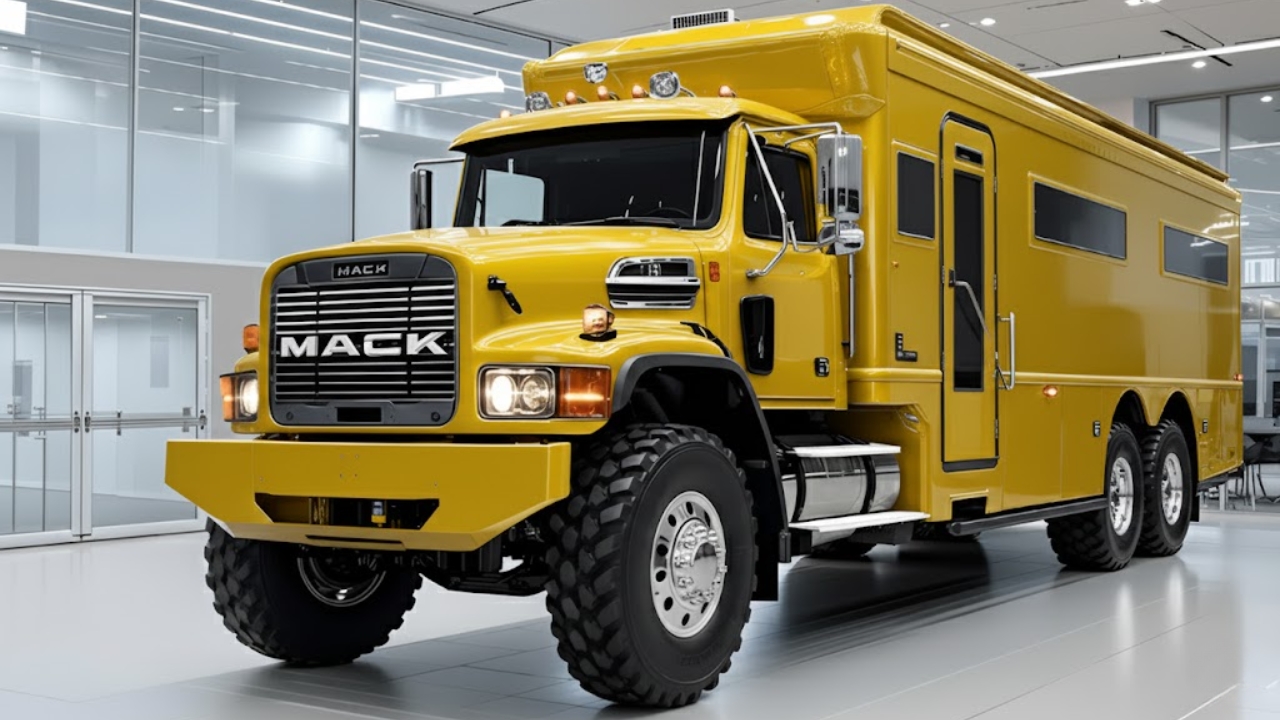
Introducing the 2026 Mack Off‑Grid Camper
The 2026 Mack Off‑Grid Camper is not just another overland vehicle; it is a mobile fortress built for people who want to disappear into the wilderness without sacrificing comfort or capability. From a militarised chassis to a fully self‑sufficient power plant, every bolt and cable has been chosen to survive in places most vehicles would simply give up on. The result is a towering, 30‑foot‑long machine that looks like a tank, feels like a home, and runs like a workhorse.
Who Will Love This Beast?
If you spend more time planning caches of fuel than checking the weather, if the phrase “road trip” makes you think of unpaved trails, then the Mack is aimed squarely at you. The target audience includes:

- Long‑term overlanders who spend months, even years, roaming remote continents.
- Survival enthusiasts who need a secure, armoured shelter that can be driven off the grid.
- Expedition teams that require a mobile command centre with built‑in communications.
- Remote‑work adventurers who want a reliable internet link while living under the stars.
The camper’s blend of durability, autonomy, and livable space means it can serve as a base camp, a rescue platform, or a luxury retreat depending on how you outfit it.
Exterior Design – Built Like a Tank
The exterior is purposefully brutal. A high‑strength steel frame wrapped in a composite‑reinforced skin forms a shell that can shrug off rocks, branches, and even low‑level ballistic threats. Key visual and functional elements include:

- A reinforced bumper with an integrated 12,000‑lb winch, perfect for self‑recovery or pulling a stuck teammate.
- 20‑inch bead‑locked wheels mated to all‑terrain tires, giving the camper a ground clearance of 14 inches.
- A roof fitted with lightweight solar panels that generate up to 7 kW in full sun, feeding the onboard battery bank.
- LED floodlights that swing 360 degrees, allowing night‑time campsite setup without external lanterns.
- Modular roof racks equipped with jerry‑can holders, toolboxes, and a detachable drone launch platform.
Every angle is designed to shed mud, channel water, and protect the cabin from the elements. The side‑mounted recovery gear, including a ladder and shackle points, ensures the vehicle can be serviced in the field without a workshop.
Interior Layout – Comfort Meets Survival
Step inside, and you’ll notice that the Mack doesn’t sacrifice livability for ruggedness. The cabin is insulated with a multi‑layer, vapor‑tight barrier that keeps the interior warm in sub‑zero temperatures and cool when the desert sun beats down. The interior features are arranged for modular flexibility:
- Sleeping Zones – Two configurable bunks that can be folded into a single king‑size bed or separated for separate occupants.
- Living Area – A swivelling bench that doubles as a dining table, complete with magnetic fasteners for cup holders and a fold‑out work desk.
- Kitchen Suite – A compact yet fully functional kitchen with a propane‑powered stove, a 45‑liter fridge, and a water‑filtration system capable of producing 100 L of potable water per day.
- Sanitation – A cassette toilet with a sealed waste tank and a hot‑water shower that pulls from a 200‑liter fresh‑water reservoir.
- Storage – Over‑head cabinets, under‑seat lockers, and a rear cargo bay that can hold two full‑size fuel drums, spare parts, and emergency supplies.
Sound‑insulated walls and a low‑frequency vibration damping system make the cabin feel more like a hotel room than a military vehicle, even when the engine is working hard.
Power, Propulsion, and Range
Mack offers two powertrain choices: a 5.9‑liter twin‑turbo diesel and a hybrid diesel‑electric system that pairs the same engine with a 120 kWh lithium‑iron‑phosphate battery pack. Both setups deliver over 450 hp and a torque peak of 1,600 lb‑ft, which translates into impressive low‑end grunt for crawling over rocks and sand dunes.

- Diesel‑Only – Provides a theoretical range of 1,500 miles on a single tank (300 gal). The engine features a variable‑geometry turbo and an eco‑map that can extend range by up to 15 % during cruising.
- Hybrid – Adds an electric motor that can run the vehicle in pure electric mode for up to 30 miles, ideal for silent camp setup or low‑emission travel through protected wilderness. Regenerative braking and the roof solar array keep the battery topped up during long hauls.
Both powertrains are paired with a 6×6 drivetrain (four‑wheel drive on the base model, six‑wheel on the premium spec). An electronic crawl control system selects appropriate gear ratios for rock, mud, sand, or snow, while a dual‑clutch transmission ensures smooth shifts even under heavy load.
Handling and Ride Comfort
Despite its massive footprint, the Mack rides surprisingly composed. Independent heavy‑duty suspension arms each incorporate long‑travel, oil‑filled shocks that can absorb the impact of a 24‑inch drop without transmitting excessive forces to the cabin. An adaptive chassis control system continuously monitors wheel slip and body roll, making micro‑adjustments to maintain traction and stability.

The steering ratio is deliberately short for low‑speed maneuverability, allowing the driver to “dance” the vehicle in tight trail corridors. On highway speeds, the steering stiffens, reducing driver fatigue and ensuring a steady, confidence‑building feel.
Technology – Staying Connected in the Wild
Mack treats connectivity as a survival issue. The integrated suite of electronics includes:

- Satellite Communications – A dual‑band VSAT antenna that guarantees voice, data, and SOS messaging in any corner of the globe.
- Navigation Hub – A ruggedized touchscreen that merges GPS, GLONASS, and BeiDou data, with offline topographic maps pre‑loaded for areas without cellular coverage.
- Drone Port – A fold‑out launch pad and charging dock for a 30‑minute flight scouting drone, allowing you to survey terrain ahead of time.
- Surveillance Cameras – 360‑degree external cameras feed live video to the cockpit, while interior cameras monitor cabin conditions for security.
- Power Management UI – Real‑time displays of solar input, battery state of charge, and diesel fuel consumption, with the ability to program power‑saving modes for lighting, climate, and appliances.
All systems are housed behind a sealed polycarbonate panel that meets IP68 standards, protecting them from dust, water, and salt corrosion.
Safety Systems – Protection When Help Is Far
The Mack’s safety philosophy assumes that rescue may take days to arrive, so the vehicle must be self‑sufficient in protecting its occupants.

- Collision‑Avoidance Radar – Forward and rear sensors detect obstacles as close as 1 meter, issuing audible alerts and, if needed, applying brakes automatically.
- Roll‑Over Protection Structure (ROPS) – A reinforced roll cage integrated into the frame limits cabin deformation in the unlikely event of a full roll.
- Fire Suppression – Three built‑in fire extinguishing modules protect the engine bay, battery compartment, and cabin interior.
- Emergency Beacon – An activated satellite beacon transmits a distress signal with GPS coordinates to emergency services.
- Climate Alerts – Integrated weather stations monitor temperature, humidity, and wind speed, warning the crew of impending storms or extreme heat.
These layers of protection make the Mack a viable choice for solo adventurers as well as corporate expedition teams.
Practicality – Space for Everything You Need
A vehicle designed for indefinite off‑grid living must carry food, water, fuel, and spare parts. Mack addresses this with a hierarchy of storage solutions:

- Primary Cargo Bay – A 12‑cubic‑meter rear compartment with a hydraulic lift, designed for fuel drums, propane tanks, or a compact trailer hitch.
- Roof Pods – Detachable, weather‑sealed containers that slide onto the roof rack, each holding up to 150 kg of equipment.
- Internal Lockers – Heavy‑duty drawers reinforced with steel ribs, ideal for tools, spare tires, and medical kits.
- Water System – A 250‑liter freshwater tank paired with a reverse‑osmosis filtration unit; a separate 100‑liter grey‑water tank holds used water for later treatment.
Quick‑release mounts and modular panels mean you can reconfigure the interior in under an hour to suit a hunting trip, a scientific survey, or a family vacation.
Pricing, Trim Levels, and Availability
Mack will roll out three primary trims for the 2026 model year:

- Base Explorer – Includes diesel powertrain, standard off‑road tires, and essential living amenities. Starting at $250,000.
- Adventure Pro – Adds hybrid power, upgraded solar array (10 kW), enhanced interior insulation, and a larger cargo bay. Starting at $340,000.
- Ultimate Sovereign – Features full armouring, the 6×6 drivetrain, premium kitchen appliances, a full‑size bathroom, and an extended battery pack. Starting at $460,000.
Optional packages cover extra solar panels, a high‑gain antenna, additional armor plating, and a winch upgrade. Production begins in Q3 2025, with deliveries slated for early 2026. Pre‑orders are accepted through Mack’s official website and a limited number of specialty overland dealers.
Final Thoughts
The 2026 Mack Off‑Grid Camper is a bold statement that says you can live comfortably far from civilization without compromising safety or capability. Its militarised chassis, self‑sufficient power systems, and adaptable interior make it a true all‑terrain home on wheels. While the price tag places it in the premium segment, the value lies in the peace of mind that comes from owning a vehicle capable of surviving where others cannot. For the serious explorer, the Mack isn’t just a purchase—it’s an investment in freedom.

Frequently Asked Questions
1. How long can the camper operate completely off‑grid without refueling or recharging?
With the diesel‑only powertrain and a full 300‑gallon fuel tank, you can expect up to 1,500 miles of travel. The hybrid version, combined with the solar roof, can sustain cabin power for several days while the engine runs intermittently to recharge the battery.
2. Is the cabin heated in sub‑zero environments?
Yes. The camper uses a diesel‑powered auxiliary heater that can deliver up to 30 kW of heat, keeping interior temperatures above 65 °F even when outside temps drop to –20 °F.
3. Can the vehicle be driven legally on public highways?
All trims meet DOT and EPA regulations for on‑road use. The standard 4×4 model is classified as a heavy‑duty truck, while the 6×6 version may require a commercial driver’s license depending on regional laws.
4. What is the warranty coverage?
Mack offers a 5‑year/100,000‑mile powertrain warranty, a 3‑year warranty on the battery pack, and a 2‑year warranty on the interior fixtures and electronics. Extended service plans are also available.
5. How easy is maintenance in remote locations?
The engine is built on a proven Mack diesel platform with widely available parts. The hybrid system uses modular battery modules that can be swapped out in the field. Detailed service manuals and a remote diagnostics portal are included with every purchase.
Disclaimer
The information provided in this article is for general informational purposes only. Specifications, pricing, and availability are subject to change by the manufacturer. Prospective buyers should verify details with an authorized Mack dealer before making any purchase decisions. This content does not constitute professional advice or a sales endorsement.