Introduction
The 2026 Honda CR‑V arrives at a time when compact SUVs are more crowded than ever, yet the Japanese automaker still manages to carve out a niche for itself. By combining a refreshed aesthetic, a wider selection of powertrains, and a cabin that feels more premium than its predecessors, the newest CR‑V aims to satisfy families, commuters, and weekend explorers alike. Below is a detailed look at what Honda has done with the 2026 model, from the first glance at the exterior to the final price tag on the dealership floor.
A New Exterior Language
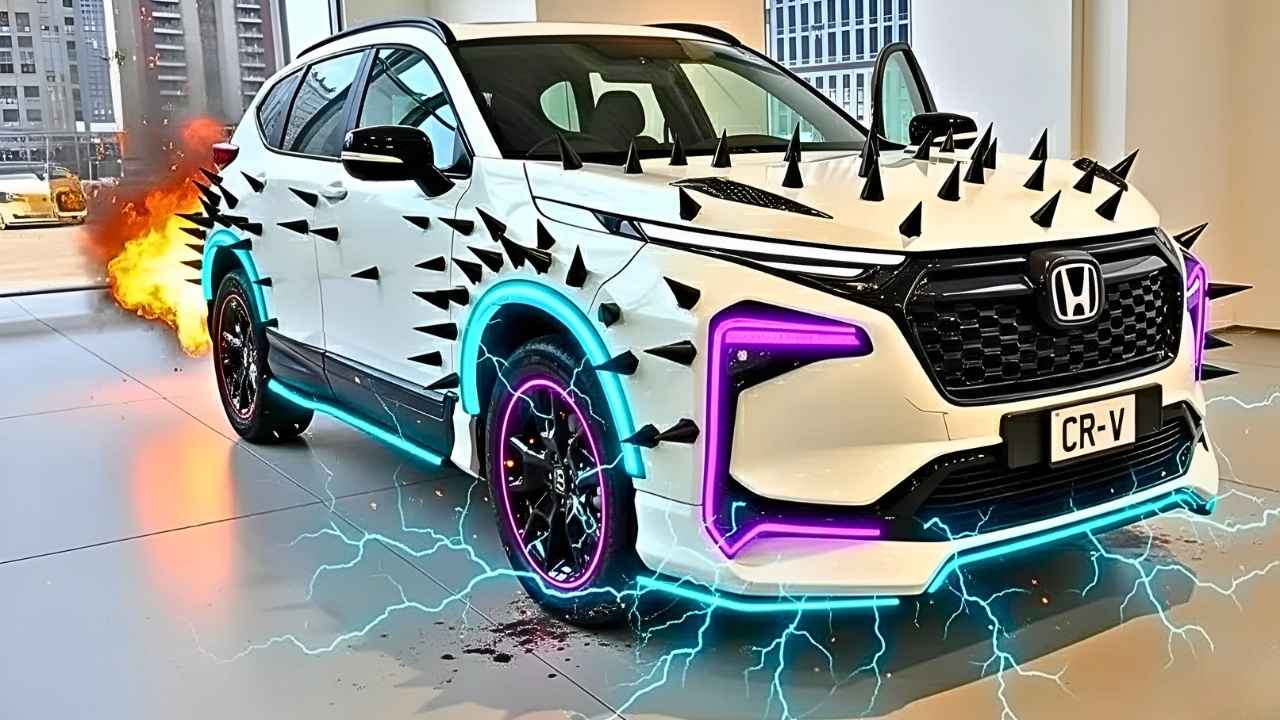
Honda’s design team gave the 2026 CR‑V a stronger visual identity while retaining the familiar proportions that have defined the model for two decades. The front end now sports a wider, honey‑comb‑shaped grille flanked by slimmer, angular LED headlights linked by a horizontal light bar that runs the full width of the bumper. This creates a more aggressive, forward‑leaning stance without appearing overly muscular.

The side profile is modestly longer, with a slightly higher beltline that gives the roof a gentle rake toward the rear. Wheel arches are deeper, allowing for broader wheels—ranging from 18‑inch alloy designs on the base trim to 20‑inch masterpieces on the top‑level Limited. Subtle sculpted side moldings help guide airflow, a nod to Honda’s effort to improve aerodynamic efficiency.
At the rear, the CR‑V now features a sleek LED tail‑lamp assembly that wraps around the edges of the hatch, paired with a newly shaped bumper that integrates a discreet rear spoiler. The overall effect is a more cohesive, upscale look that helps the 2026 CR‑V stand out in a segment often dominated by bland boxy shapes.

Powertrain Choices
Honda continues to rely on a turbocharged four‑cylinder for the mainstream version, but the 2026 CR‑V sees an increase in output. The 1.5‑liter turbo now delivers roughly 190 horsepower and 179 lb‑ft of torque, providing brisk acceleration while keeping fuel consumption in the mid‑30 mpg combined range. The engine is coupled with an updated continuously variable transmission (CVT) that feels smoother and more responsive, especially during overtaking maneuvers.
For those looking for greener credentials, the hybrid variant pairs a 2.0‑liter Atkinson‑cycle engine with an integrated electric motor, pushing combined power to about 212 horsepower. The hybrid system operates in a parallel configuration, allowing the gasoline engine and motor to work together or independently depending on driving conditions. In city traffic, the electric motor can handle low‑speed cruising, delivering an estimated 40 mpg (US) combined, while on the highway the hybrid maintains a respectable 38 mpg.

Both powertrains are offered with front‑wheel drive as standard, while all‑wheel drive is available as an option across the lineup. The AWD system is tuned for light off‑road excursions and provides additional confidence in rain or snow without a significant hit to fuel economy.
Interior Comfort and Technology
Step inside the 2026 CR‑V, and the first thing you notice is the higher perceived quality. Soft‑touch plastics replace many of the hard‑body panels from previous years, and optional leather‑trimed seats add a touch of luxury. The cabin width has been increased by a few centimeters, allowing rear‑seat passengers more shoulder room and a more generous hip‑to‑hip span.

The dashboard centers around an 11‑inch touchscreen that runs the width of the center console. Honda’s latest infotainment software supports Apple CarPlay, Android Auto, and a built‑in Bluetooth streaming capability. A wireless charging pad is now standard on the EX‑L and higher trims, freeing up the rear cup‑holder space for a headset or other items.
Driver‑assist technology has also been broadened. The Honda Sensing suite—adaptive cruise control, lane‑keeping assist, traffic‑sign recognition, and collision mitigation braking—comes standard on all trims. Higher trims can add a 360‑degree camera system, a head‑up display, and a front‑side collision mitigation system that detects pedestrians and cyclists.

Cargo versatility remains a strong point. The rear seats fold flat with a 60/40 split, and a low load floor makes it easy to slide in bulky items. With the seats down, the CR‑V offers just over 75 cubic feet of cargo space, enough to accommodate a set of golf clubs, a small piece of furniture, or a weekend’s worth of camping gear.
Driving Dynamics
Honda has tuned the 2026 CR‑V’s suspension to strike a balance between comfort and agility. The front MacPherson struts are paired with a rear multi‑link arrangement that smooths out road imperfections while still providing confident handling through twisty roads. Steering effort is light enough for city crawling but offers enough feedback to make the driver feel connected to the road.

The AWD system, when engaged, provides a modest torque split that can send up to 60 percent of power to the rear wheels during hard acceleration, reducing understeer and improving corner exit. The hybrid model benefits from instant torque delivery from the electric motor, making low‑speed acceleration feel more lively than the gasoline‑only version.
Noise, vibration, and harshness (NVH) levels have been reduced thanks to improved body‑panel sealing and additional acoustic glass on the front windows. At highway speeds, wind and road noise remain low, allowing occupants to enjoy music or conversation without raising the volume.

Pricing, Trims, and Availability
Honda has structured the 2026 CR‑V lineup into four primary trims:
- LX – base model with the 1.5‑liter turbo, front‑wheel drive, and essential tech.
- EX – adds a larger infotainment screen, dual‑zone climate control, and a sunroof.
- EX‑L – introduces leather‑like upholstery, heated front seats, and the wireless charger.
- Touring – top‑end offering with premium leather, a 12‑speaker audio system, and most advanced driver‑assist features.
Pricing in the United States is expected to start around $29,400 for the LX, climb to $33,200 for the EX‑L, and reach $37,900 for a fully equipped Touring with AWD. The hybrid powertrain carries a premium of roughly $3,000 across the board, placing the hybrid EX‑L near $36,200.

Production is scheduled to begin in late 2025, with deliveries to dealerships slated for early 2026. Early‑bird incentives may include a low‑interest financing rate for qualified buyers and a complimentary maintenance package for the first three years.
Conclusion
The 2026 Honda CR‑V represents an evolutionary step that feels fresh without abandoning what made the model successful for the past two decades. A bolder exterior, more capable powertrains—including an efficient hybrid—and a cabin that finally feels as refined as the badge suggests, give the CR‑V a renewed competitive edge. Whether you need a reliable family hauler, a comfortable commuter, or a versatile SUV for occasional off‑road fun, the 2026 CR‑V offers a well‑rounded package that should appeal to a broad spectrum of buyers.

Frequently Asked Questions
1. What fuel economy can I expect from the gasoline‑only CR‑V?
The 1.5‑liter turbocharged engine is rated at about 31 mpg city and 34 mpg highway, for a combined figure near 33 mpg (US).
2. Does the hybrid version qualify for federal tax credits?
Yes, the 2026 CR‑V Hybrid meets the requirements for a $1,500 federal tax credit in the United States, subject to income‑phase‑out rules.

3. How many passengers can the CR‑V comfortably seat?
All trims accommodate five passengers, with ample headroom and legroom in both the front and rear rows.
4. Is Apple CarPlay available on the base LX trim?
Apple CarPlay and Android Auto are standard on the EX trim and above. The LX includes a basic infotainment system without smartphone integration.
5. What warranty coverage does Honda provide?
Honda offers a 3‑year/36,000‑mile limited bumper‑to‑bumper warranty and a 5‑year/60,000‑mile powertrain warranty for the 2026 CR‑V.
Disclaimer
The specifications, pricing, and availability details provided here are based on information released by Honda as of the time of writing and may be subject to change before the vehicle reaches the market. Prospective buyers should verify the latest data with an authorized Honda dealership.